
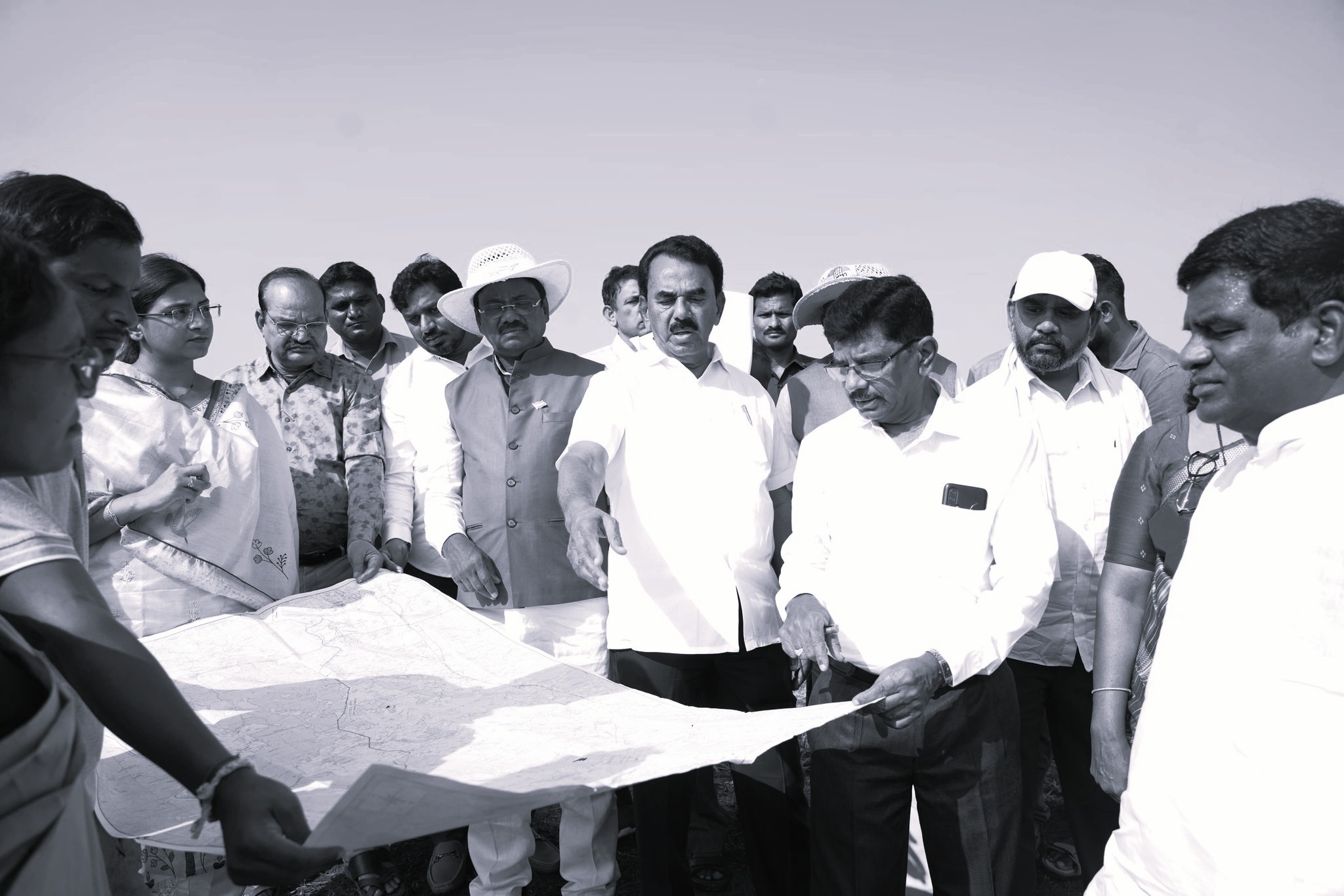
Ministers Conduct Ground-Level Review Of Tummidihatti Project
The Telangana government has intensified efforts to revive the long-pending Tummidihatti irrigation project aimed at addressing the water needs of the undivided Adilabad district. As part of the initiative, state ministers Jupally Krishna Rao and Vivek Venkataswamy visited the project site on Friday to review the progress of the works.
The ministers held discussions with officials and local representatives on the current status of the project and the roadmap for its completion. The Pranahita-Chevella scheme, launched in 2008 by former Chief Minister Y.S. Rajasekhara Reddy , was designed with an estimated cost of ₹38,500 crore to provide irrigation facilities to nearly 16 lakh acres .
According to officials, proposals were prepared for the construction of 106 kilometres of canals, while land acquisition for 71.5 kilometres has already been completed. Canal works covering 46 kilometres have also been finished.
Addressing the media, the ministers alleged that the previous BRS government had sidelined the Tummidihatti project and prioritised the Kaleshwaram Lift Irrigation Scheme instead. They said relying on pump-based water lifting instead of a gravity-based system had significantly escalated project costs and increased the financial burden on the state.
The ministers stated that despite the availability of river waters, farmers in Sirpur, Asifabad, Bellampalli, and Chennur constituencies did not receive the expected irrigation benefits. They added that Chief Minister Revanth Reddy has now decided to revive the project to ensure long-term benefits for farmers and strengthen irrigation infrastructure in the region.
The government, they said, would soon hold discussions with the Maharashtra government to expedite the project. They also assured that farmers losing land for the project would be provided adequate compensation.
Referring to the damage to the Medigadda barrage pillars, the ministers said the revived Tummidihatti project would enable water diversion to the Sripada Yellampalli project through gravity flow, reducing operational costs by eliminating the need for large-scale electricity consumption.